What Is Oilite? Sintered Bronze Bearings, Oil Impregnation and Grades Explained
Introduction
A self-lubricating bearing is quite a trivial thing in appearance; however, it can become quite a solution in those machines where lubrication cannot be done easily. These are Oilite bearings.
This bearing was invented back in the 1930s in Chrysler and gained popularity due to its porous metal construction capable of holding lubricant inside of the bearing itself. Since then, this bearing has been applied in many spheres starting from the automotive industry up to aerospace.
But what features are specific for the Oilite bearing, and how does one need to select and use it? Let us find out.
1. What Is Oilite?
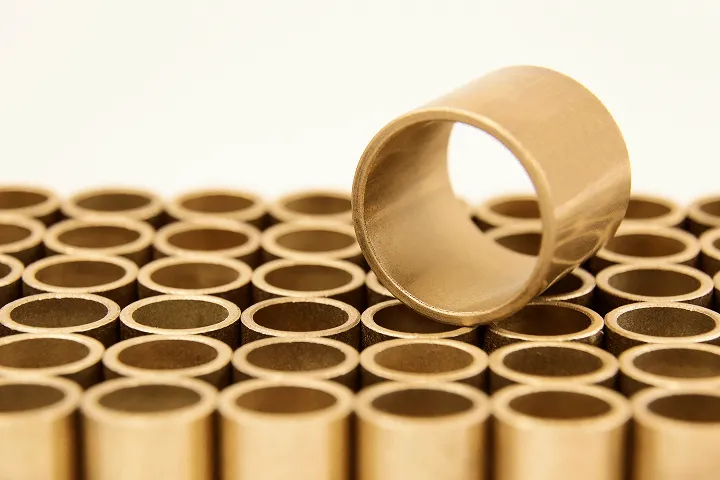
Oilite® is a trademark for self-lubricating oil-impregnated bearings. Authentic Oilite bearings are manufactured through the process of impregnating a porous sintered metal body, made usually of bronze.
As opposed to a regular bronze bush, an Oilite bearing consists of pores that contain lubricating oil. When the bearing is in use, heat and motion assist in bringing the oil from the inside of the bearing to its surface, creating a film of lubricant between the bearing and the shaft.
2. How Are Sintered Bronze Bearings Made?
Sintering is one process in powder metallurgy. Metal powders are compressed into the required form in a mold and then heated under controlled atmospheres.
The particles are bonded without melting the material, resulting in porosity in the formed part.
This feature is crucial for Oilite as it provides the capacity for containing lubricant. The result is a bearing that is strong like a metal part and contains oil storage.
3. How Does Oil Impregnation Work?
The next step after fabrication of the porous bearing is vacuum impregnation of the bearing with oil.
Bowman Standard Oilite bearings are impregnated with highly refined mineral oil to ISO VG 30 (SAE 30), which contains additives that prevent oxidation, rust, and foam.
In operation, some of this oil tends to migrate to the bearing surfaces depending on operating conditions. Cooling of the bearing causes the oil to be absorbed back into the pores, thus maintaining lubrication through repeated cycles of operation.
Other special impregnation oils can also be used when necessary. For example, extreme pressure additives and molybdenum disulphide might be needed in some applications involving heavy loads and certain types of shaft materials.
4. Oilite Grades and Choosing the Right Oil
There are various grades of Oilite material; however, grade choice must be based on use, not just on the name of the material. Various grades of Oilite materials are listed by Bowman, although its product literature does not mention all grades.
Viscosity of oil is important too. For example:
Oils of low viscosity are better suited for low temperature, high speeds, or light loading.
Oils of high viscosity are suitable for high temperature, low speed, or heavy loading.
Extreme pressure lubricants can be used where there is heavy shock or loading.
The right specification of the oil depends on the conditions of operation; therefore, special cases should be consulted with the bearing manufacturer.
5. Available Oilite Bearing Forms
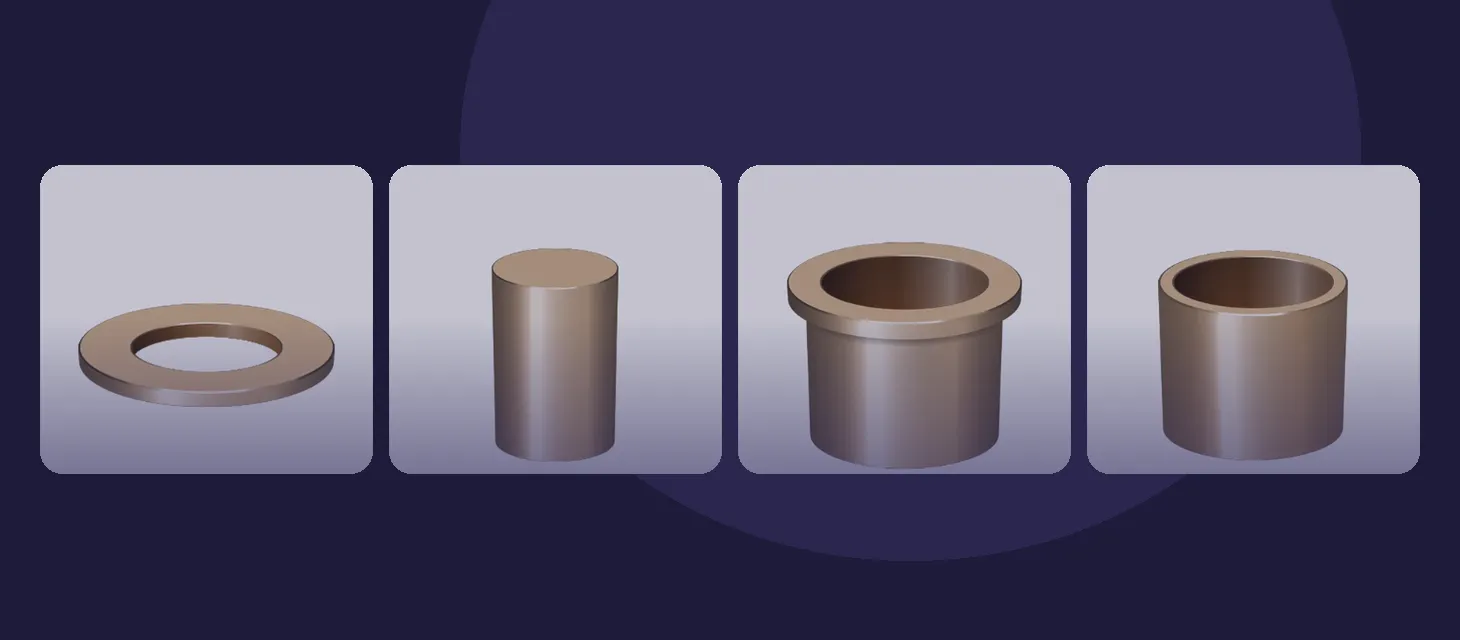
Oilite bushings are not limited to cylindrical bushes only. Based on the need, they can be provided in the form of:
Plain bushes: For ordinary shaft-bearing applications.
Flanged bearings: Offer radial support as well as have an in-built flange for axial location purposes.
Thrust washers: Offer support to axial load between moving parts.
Plate bearings and bars: Can be useful in some specific applications requiring machining of the component to the right size.
Custom and machined solutions can also be considered where standard dimensions do not meet the application requirements.
6. Shaft and Fitting Requirements
The performance of a bearing also depends on the shaft and not just on the bearing. In accordance with Bowman, the hardness of the shaft for typical Oilite applications must be HRC 60 while its surface finish must be Ra 0.25 µm.
In order to prevent damage to the bearing, it is important to remove all the sharp edges from the housing and shaft before mounting the bearing. Ensure that you use an appropriate fitting pin and pressure during the process of pressing.
7. How to Re-oil Oilite Bearings
These Oilite bearings are engineered to function as self-lubricating bearings, and so their lubrication is typically not necessary, unless under certain conditions.
For re-lubrication, if needed after machining or oil loss in storage, the following method proposed by Bowman:
Submerge the bearing in good quality mineral oil of ISO VG 68 or ISO VG 150 grade.
Heat the oil to 60-70°C.
Hold the bearing in this condition for 10-15 min.
Take out and cool down in cold oil.
Note that this method is intended specifically for re-oiling, not for general use of those oils in all applications.
8. Applications and Storage
Oilite bearings find usage in automobiles, electric motors, pumps, and other machines where reliability of lubrication and lower maintenance is essential. History of Oilite bearings also includes use in the Supermarine Spitfire aircraft and Formula 1 racing cars.
Bearings should be stored in metallic or other non-absorbent box at room temperature, away from any source of heat, as it causes leakage of oil from the pores. If oil leakage is suspected, refer to the manufacturers’ recommendations for re-oiling the bearings.
Looking for genuine Oilite bearings? Explore Bowman’s Oilite sintered bearing range for standard and specialist requirements.
Frequently Asked Questions
What is Oilite made of?
Oilite bearings use a porous sintered metal structure, traditionally based on bronze, with lubricating oil held in the pores.
Do Oilite bearings need extra lubrication?
Not normally under suitable operating conditions. Their internal oil reservoir supplies lubrication during operation.
How do you re-oil an Oilite bearing?
Bowman specifies immersion in ISO VG 68 or ISO VG 150 mineral oil at 60–70°C for 10–15 minutes, followed by cooling in cold oil.
What is the difference between Oilite and other sintered bronze bearings?
Oilite is a specific registered brand of oil-impregnated bearings. Sintered bronze bearings describe a broader category, and not all are manufactured or impregnated to the same specifications.
What shaft hardness and finish are recommended?
Bowman recommends approximately HRC 60 hardness and a ground surface finish of Ra 0.25 µm for standard Oilite applications.