
How 3D printing supports a medical revolution
Topic
In this, the first of four articles exploring some of the sectors unlocking the greatest potential from 3D printing in medical applications, we discuss how additive manufacturing is making a real difference in the dental and healthcare industries.
3D printing first came to many people’s attention in healthcare during the height of the COVID-19 pandemic, when additive manufacturers helped produce urgently needed medical equipment and tools. Today, medical 3D printing is being used to boost efficiency, reduce risks, and deliver better patient outcomes across a wide range of applications.
From medical implants and hearing aids to surgical models for education and complex, customised prosthetics that improve comfort for users, 3D printed medical devices are transforming modern healthcare. These components are manufactured on demand, helping reduce lead times while minimising storage requirements.
Patient-Centric 3D Printing in Medical Applications
One of the biggest advantages of 3D printing in medical applications is the ability to produce patient-specific solutions. It is transforming the field of implants, such as hip replacements, by enabling specialists to design implants that closely match each patient’s unique anatomy, helping reduce the risk of complications.
In addition, surgeons are increasingly using 3D-printed anatomical models based on patient scans to better plan complex procedures, improving surgical precision and patient outcomes. Another important application of additive manufacturing in medical industries is the production of intricate drug delivery systems, allowing customised drug release profiles that improve treatment effectiveness and patient compliance.
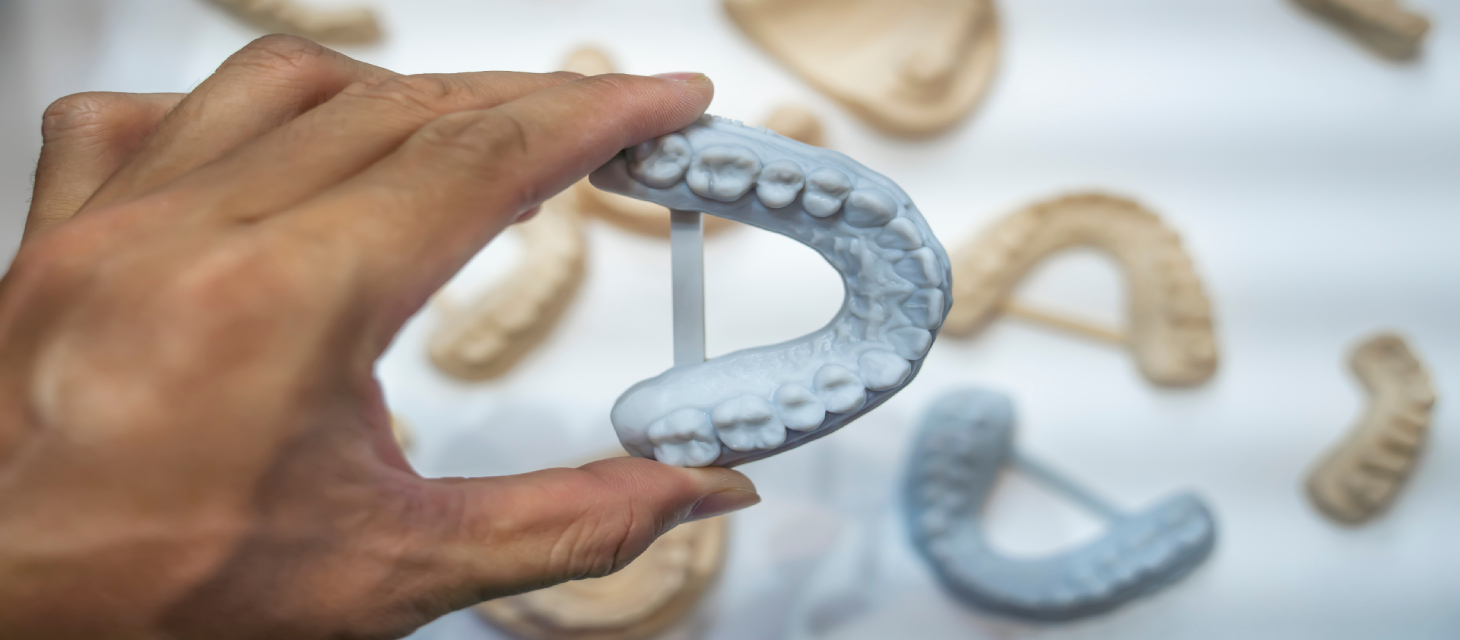
The opportunities are equally significant in the dental sector, where healthcare 3D printing is widely used to manufacture customised dental implants, crowns, bridges, retainers, dentures, and anatomical models for education and professional training.
The Future of Medical 3D Printing
The possibilities for medical 3D printing continue to grow, particularly in industries where innovation has a direct impact on quality of life. One of the most exciting developments is bioprinting, which uses additive manufacturing techniques to deposit living cells layer by layer to create tissues and organs. This emerging technology has the potential to revolutionise organ transplantation and reshape the future of healthcare.
Want to learn more about 3D printing in medical and dental applications? Email us at bowman3d@bowman.co.uk