Let’s get plated
Electroless Nickel Plating for Bearings
In this month’s blog at Arvis, we’ll be talking about Electroless Nickel Plating (ENP) – how it’s made, its uses, and its benefits, particularly plated bearings and other engineered components.
The biggest maintenance requirement for many industries is the replacement or repair of corrosion-damaged bearings. In fact, using the right materials and bearing surface treatment can help reduce maintenance costs significantly. Most metallic coatings offer limited protection against corrosive environments. However, there are two main materials commonly used for electroless plating: chromium and nickel. Of these, Electroless Nickel Plating is by far the most widely used, so we’ll focus on that.
Bearing plating is the process of applying a layer of corrosion-resistant metal to a base material. This protective layer improves resistance to rust, corrosion, and wear, rather than a suit of armour protecting the person wearing it. Without the correct finish, metal components can be far more susceptible to scratches, impact damage, and environmental attack.
How Electroless Nickel Plating Works
Now that you know what it is, let’s look at the science behind it.
Electroless Nickel Plating (ENP) is the application of a nickel-alloy coating through a chemical reduction process. Unlike electroplating, this process does not require an electric current- hence the name “electroless.”
The process involves submerging the base metal into a reducing agent, most commonly sodium hypophosphite. Although alternatives such as sodium borohydride and dimethylamine borane exist, they are used far less frequently.
When the reducing agent is catalysed by suitable materials, the metal ions are reduced and deposited onto the base metal, creating a uniform nickel coating. The phosphorus content of the coating plays an important role: higher phosphorus levels provide greater corrosion resistance against environments such as saltwater, carbon dioxide, hydrogen sulphide, and many other aggressive chemicals. However, excessive phosphorus can reduce the hardness of the finished coating.
Uses and Benefits of Electroless Nickel Plating
Now that we’ve covered the science, let’s look at the practical benefits.
As we’ve already discussed, the greatest advantage of ENP is its excellent corrosion resistance. It creates an even coating around the entire component regardless of its size or geometry, covering slots, holes and even the inside of tube walls. This makes it an ideal bearing coating for complex components.
Even if corrosion begins through a pinhole or damaged area, it generally remains localised rather than spreading across the entire surface. In addition, even without heat treatment, ENP provides excellent hardness and wear resistance.
This makes ENP a highly cost-effective bearing surface treatment wherever wear and corrosion are major concerns. It extends component service life while allowing lower-cost base materials to perform in demanding environments, particularly where carbon steel would otherwise suffer localised corrosion.
Electroless Nickel Plating at Arvis
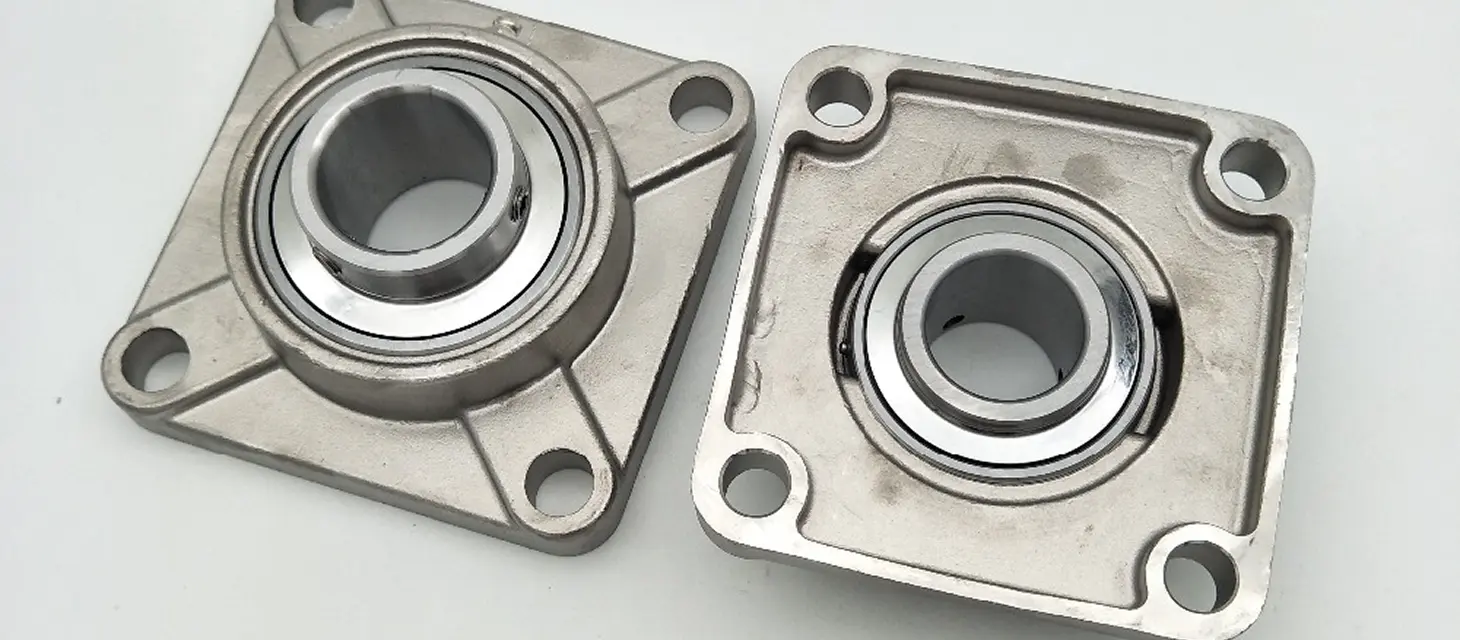
Here at Criptic Arvis, we have been applying Electroless Nickel Plating to our products for decades. Our plated bearings, plated bushings, plummer blocks, self-lubricating housings, and many other standard and bespoke bearing solutions all benefit from this proven protective process.
Whether you require enhanced corrosion resistant bearings for harsh industrial environments or customised bearing solutions, our team can provide products designed to meet your exact application requirements.
As we like to say; Designed to your requirement.
By George Nasi | Sales Engineer
Please email the Arvis Team at sales@arvis.co.uk or call us on 01162 609 700