3D printing drones are set to transform humanitarian aid
Topic
A team of researchers and engineers are pioneering the use of wasp-inspired 3D printed drones to build emergency shelters – and we think it’s brilliant!
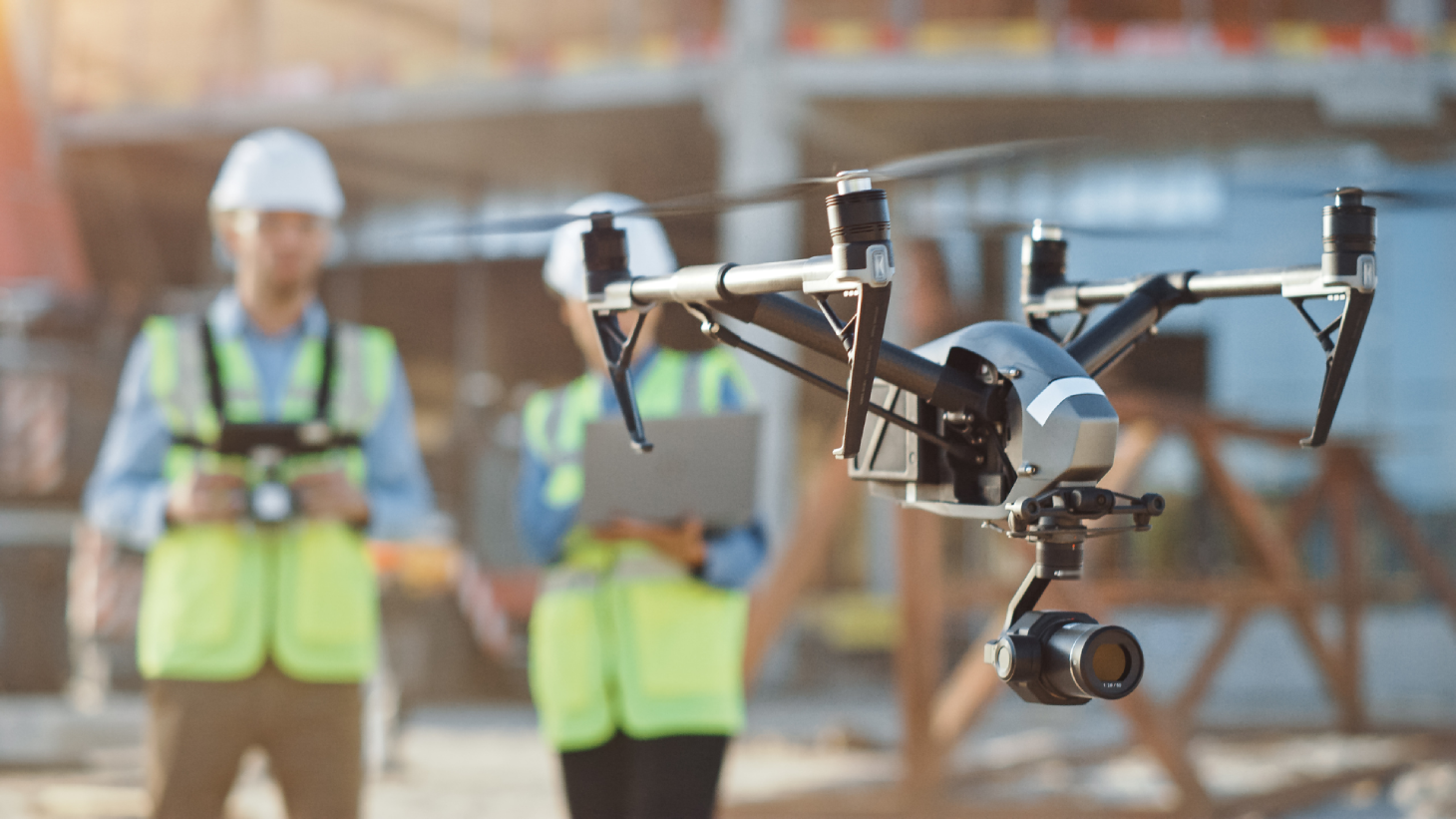
The drones, or “aerial robots”, deposit cement-like material in carefully positioned layers to create a structure tall enough to provide emergency shelter for those displaced by war or natural disaster, particularly in hard-to-reach or cut-off regions.
Wasp-Inspired Swarms
Taking inspiration from wasps and bees that work in swarms to deposit material and build large but intricate structures, the researchers set out to create a swarm of 3D printing drones that could work together to erect emergency shelters quickly and safely.
This research signifies an industry-first breakthrough as the first time 3D printing had ever been achieved by a free-flying robot- and it wasn’t without its challenges!
Achieving Accuracy in Flight
To make a 3D printed structure strong and secure, each layer must be printed with faultless precision – something that many considered impossible to achieve with free-flying technology.
To overcome this, researchers introduced scanning drones to their swarm of robot wasps, capable of accurately measuring the print in progress and automatically telling the printing drones where to deposit the next layer.
Counteracting Natural Flight Behaviour
The next challenge was overcoming the natural flight behaviour of the drones so that they could hold their coordinates while they print.
Drones naturally drift in flight, especially outdoors, so the experts created a print head that adjusted its position to compensate for the drone’s drifting movements.
The result was millimetre-perfect printing precision and an intricate filigree pattern of construction.
Improving Humanitarian Efforts with 3D Printed Drones
This research took ground-breaking steps towards arming governments with technologies that could propel forward our global humanitarian efforts. The use of semi-autonomous teams of wasp-like humanitarian drones using additive manufacturing drones’ technology will hopefully become a reality for disaster zones in the not-so-distant future, giving us the ability to provide well-constructed shelters even in remote or cut-off areas.
As drone components 3D printing technology continues to advance, innovations like these demonstrate how 3D printed drones could play an important role in future aid delivery drones and emergency response applications.
Looking for more information on this topic? Check out the links below!
Full research report: https://www.nature.com/articles/s41586-022-04988-4